
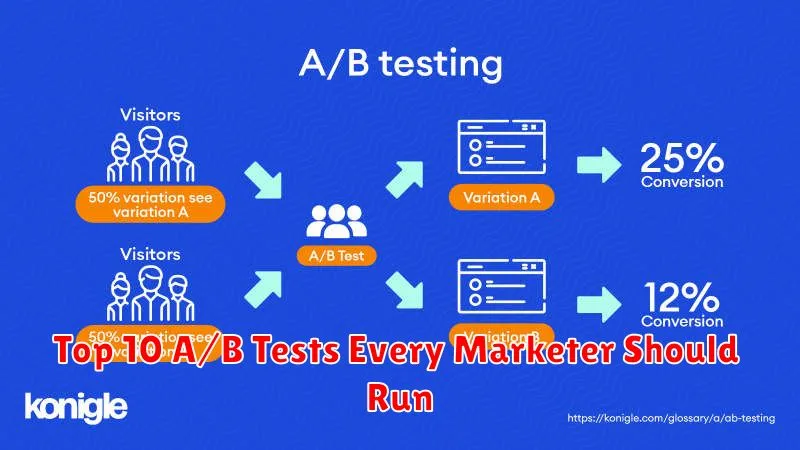
A/B testing is a critical component of any successful marketing strategy. It allows marketers to make data-driven decisions, optimize campaigns, and ultimately improve their return on investment (ROI). By systematically testing different variations of marketing materials, you can identify what resonates best with your target audience and refine your approach for maximum impact. This article will explore the top 10 A/B tests every marketer should run to optimize their marketing efforts and achieve better results. From email marketing and landing pages to call-to-actions and ad copy, we will cover essential A/B tests that can significantly enhance your marketing performance.
Whether you are a seasoned marketer or just starting out, understanding the power of A/B testing is essential for success in today’s competitive landscape. By implementing the A/B tests outlined in this article, you can gain valuable insights into customer behavior, improve conversion rates, and drive significant growth for your business. This compilation of essential A/B tests will provide you with a strong foundation for optimizing your marketing campaigns and maximizing your ROI. Prepare to unlock the full potential of your marketing efforts through the power of data-driven decision making with these top 10 A/B tests.
Testing Email Subject Lines
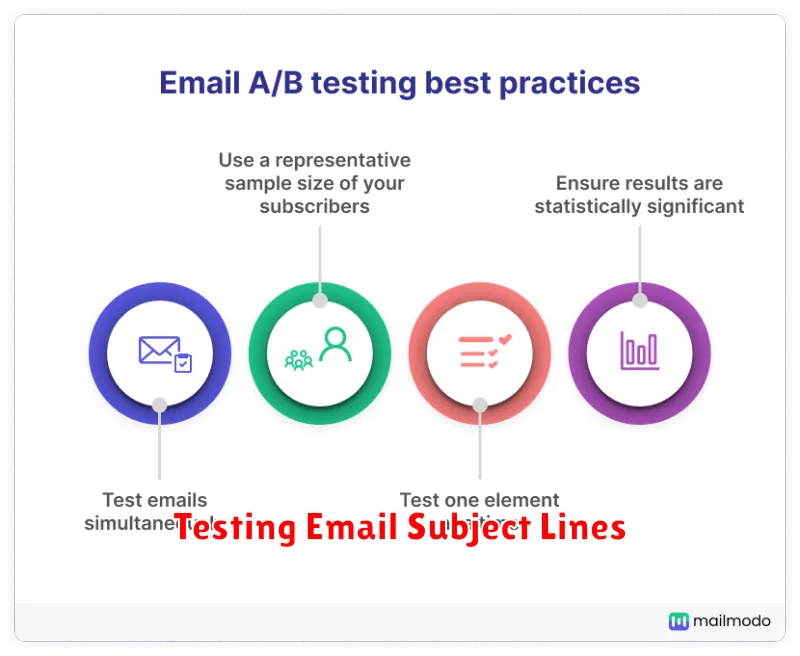
One of the most impactful A/B tests you can run is on your email subject lines. Subject lines are the first, and sometimes only, impression you make on a recipient. A strong subject line can dramatically improve your open rates, while a weak one can send your email straight to the trash.
Test different approaches to identify what resonates best with your audience. Experiment with:
- Length: Compare short, concise subjects with longer, more descriptive ones.
- Personalization: Use the recipient’s name or other relevant data.
- Keywords: Include relevant keywords to improve searchability and relevance.
- Tone: Try different tones, such as urgency, curiosity, or humor.
- Emojis: Use emojis sparingly to add personality and visual appeal (test with and without).
By testing these elements, you can optimize your subject lines for maximum open rates and ultimately, improve your email marketing ROI.
Comparing Call-to-Action Phrases
A/B testing different call-to-action (CTA) phrases is crucial for optimizing conversion rates. Slight variations in wording can significantly impact how users respond. This test focuses on identifying the most effective phrasing to encourage desired actions.
For example, you might test variations such as:
- “Get Started Now” vs. “Try it Free”
- “Learn More” vs. “See How it Works”
- “Shop Now” vs. “View Products”
By analyzing click-through rates and conversions for each variation, you can determine which CTA resonates best with your target audience. Tracking the performance difference between variations provides valuable insights for improving your overall marketing strategy.
Changing Button Colors and Placement
Button color and placement are crucial elements influencing conversion rates. Slight alterations can have a significant impact. A/B testing allows you to determine the optimal combination for your target audience.
Experiment with contrasting button colors. Test variations against your background color to ensure the button stands out. Consider testing shades that align with your brand identity while remaining visually prominent.
Test different button placements. Above the fold, below the fold, in the middle of content – all these locations can affect how users interact with your call to action. Consider the user journey and where a button placement makes the most sense.
Consider button size and shape. While less drastic than color and placement changes, these elements can still contribute to improved conversions. A larger button might draw more attention, while a uniquely shaped button could create visual interest.
Testing Page Headlines
Your headline is the first, and often only, impression you make on a potential customer. Headline testing is crucial for optimizing conversion rates. A slight change in wording, tone, or length can significantly impact how many visitors continue reading.
Consider testing different approaches. For example, try a question headline versus a statement headline. Test headlines focusing on benefits against those highlighting features. Also, experiment with headline length. Shorter, punchier headlines can sometimes outperform longer, more descriptive ones.
Key elements to test:
- Wording
- Length
- Tone (e.g., formal vs. informal)
- Focus (e.g., benefits vs. features)
- Type (e.g., question vs. statement)
A/B Testing Ad Creative
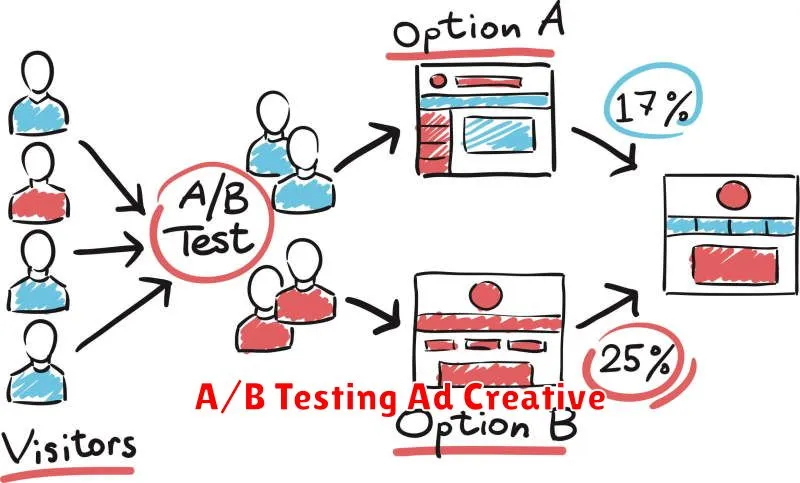
A/B testing your ad creative is a fundamental aspect of optimizing marketing campaigns. It allows you to directly compare different versions of your ads to determine which performs better against your chosen key performance indicators (KPIs), such as click-through rate (CTR), conversion rate, or cost per acquisition (CPA).
Experiment with various elements of your ad creative, including:
- Headlines: Test different phrasing, lengths, and value propositions.
- Body copy: Experiment with different messaging, calls to action, and tone.
- Visuals: Compare the performance of different images, videos, or animations.
- Call to action: Try variations in wording, placement, and design.
By systematically testing these components, you can identify the most effective combination that resonates with your target audience and drives the desired results. Remember to test one element at a time to isolate the impact of each change.
Example: You might test two versions of an ad, one with an image of a person using your product and another with a product-focused image. Analyzing the results will reveal which visual performs better.
Testing Landing Page Layouts
A landing page’s layout significantly impacts conversion rates. Testing different layouts allows you to identify which arrangement of elements resonates most effectively with your target audience. This involves experimenting with the placement of key elements like your headline, call-to-action button, form fields, and visual content.
Consider testing variations such as single-column versus two-column layouts, the position of your call to action above or below the fold, and the impact of different visual hierarchies.
For example, a simple A/B test could involve comparing a landing page with a form on the right-hand side against another version where the form is positioned on the left. By analyzing the conversion rates of each version, you can determine which layout yields better results.
Experimenting With Product Descriptions
Product descriptions directly influence purchasing decisions. Testing different versions allows you to determine which resonates most effectively with your target audience.
Consider experimenting with these elements:
- Length: Compare concise descriptions against more detailed explanations.
- Tone: Test a formal tone versus a more casual and friendly approach.
- Keywords: Incorporate relevant keywords for improved search engine optimization (SEO), but ensure the description remains natural and engaging.
- Features vs. Benefits: Focus on the advantages customers gain rather than simply listing product specifications.
By analyzing the results of these A/B tests, you can refine your product descriptions to maximize conversions and improve sales.
Timing Email Sends
The timing of your email campaigns can significantly impact open and click-through rates. A slight adjustment to your send time can mean the difference between a successful campaign and one that falls flat. Therefore, A/B testing is crucial to determine the optimal send time for your specific audience.
Test different days of the week. Conventional wisdom might suggest weekdays are best, but your audience might be more receptive on weekends. Test different times of day. Consider time zones and typical work schedules. For instance, sending emails during lunch breaks or early evenings might yield better results than sending them during the workday rush.
A simple A/B test can involve splitting your email list in half. Send the same email to Group A on a Tuesday morning and to Group B on a Thursday afternoon. Analyze the open and click-through rates for each group to determine which send time performed better. Continue testing variations until you find the sweet spot for maximum engagement.
Testing Navigation Menus
Navigation menus are critical for website usability. A confusing or inefficient menu can lead to high bounce rates and lost conversions. A/B testing different menu variations can significantly impact user engagement.
Consider testing different menu structures (e.g., mega menus vs. simple dropdowns), labels (e.g., “Shop” vs. “Products”), and even placement within the page. Small changes can make a big difference in how easily visitors navigate your site.
Key metrics to track during navigation menu A/B testing include:
- Bounce rate
- Pages per session
- Conversion rate
- Time on site
By optimizing your navigation menu through A/B testing, you can create a more user-friendly experience, encouraging visitors to explore your site and ultimately achieve your desired business outcomes.
Comparing Different Offers
A/B testing different offers is a critical aspect of optimizing conversion rates. This test helps determine which offer resonates most effectively with your target audience. This could involve comparing different pricing models, such as a one-time purchase versus a subscription.
Alternatively, you might test different product bundles or promotional incentives. For instance, offering free shipping versus a percentage discount. Tracking key metrics like conversion rates, average order value, and click-through rates will illuminate the superior offer.
Consider testing variations in the presentation of the offer. A concise, benefit-driven offer may outperform a lengthy, feature-focused description. Testing the wording and placement of your call to action within the offer is also essential.
