
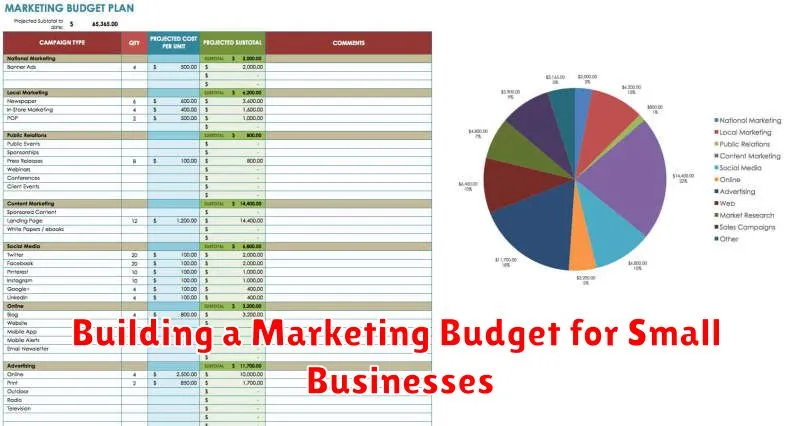
Developing a marketing budget is a crucial step for any small business aiming to grow and thrive. A well-defined budget ensures that your marketing efforts are strategic, measurable, and aligned with your overall business objectives. This comprehensive guide will provide you with practical steps to build an effective marketing budget for your small business, regardless of your industry or size. We’ll cover everything from determining your marketing spend to allocating resources across different marketing channels and tracking your return on investment (ROI).
Whether you’re just starting out or looking to refine your existing small business marketing strategy, this guide will offer valuable insights. Learn how to prioritize marketing activities, choose the right marketing mix, and ultimately, maximize your marketing budget’s impact. We’ll explore various budgeting methods and provide real-world examples to help you confidently navigate the process of creating a successful marketing budget for your small business.
Assessing Your Overall Business Goals
Before diving into budget specifics, clearly define your overall business goals. A marketing budget isn’t an isolated entity; it serves the broader objectives of your business. Ask yourself: What are you hoping to achieve in the next quarter, six months, or year? Are you aiming for increased brand awareness, higher sales conversions, or expansion into new markets?
Clearly defined goals will shape your budget allocation. For example, if brand awareness is your primary focus, you might allocate more resources to social media marketing and public relations. Conversely, if sales conversions are paramount, investing in targeted advertising campaigns or search engine optimization (SEO) might be more effective.
Consider using the SMART framework to ensure your goals are Specific, Measurable, Achievable, Relevant, and Time-bound. This framework provides a structured approach to goal setting and helps to ensure your marketing efforts are aligned with overall business objectives.
Setting a Monthly or Quarterly Budget
After calculating your overall annual marketing budget, break it down into manageable monthly or quarterly increments. This allows for greater flexibility and control over spending.
A monthly budget provides a close-up view of marketing performance and enables quick adjustments to campaigns. This is particularly useful for businesses in rapidly changing markets or those launching new products/services.
A quarterly budget offers a broader perspective, smoothing out short-term fluctuations and providing a more stable platform for evaluating long-term strategies. This approach can be advantageous for businesses with more established marketing plans.
Consider factors such as seasonal trends and anticipated sales cycles when allocating funds within each period. For example, businesses with strong holiday sales might allocate a larger portion of their budget to the fourth quarter.
Allocating Funds Across Channels
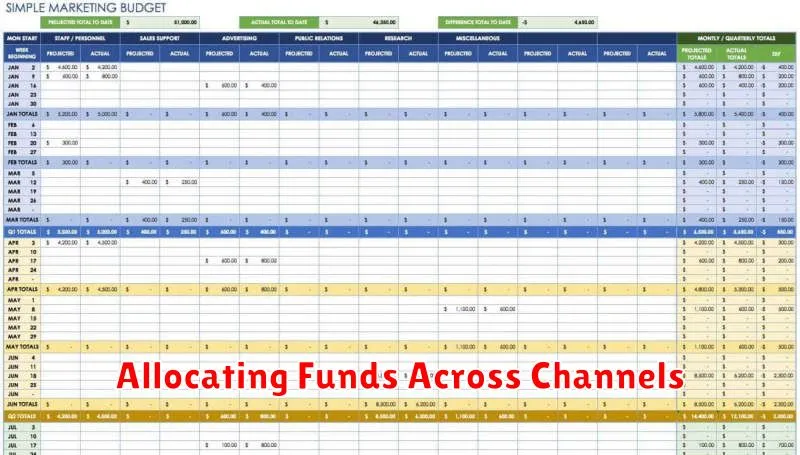
After determining your overall marketing budget, the next crucial step is allocating these funds effectively across different marketing channels. The optimal distribution depends heavily on your target audience and business objectives.
Consider these common channels and their potential benefits:
- Digital Marketing: This encompasses various online channels like search engine optimization (SEO), pay-per-click (PPC) advertising, social media marketing, and email marketing. Digital marketing offers excellent targeting and measurability.
- Traditional Marketing: This includes print advertising, direct mail, radio, and television. While often more expensive, traditional methods can be effective for reaching specific local demographics.
- Content Marketing: Creating valuable content, such as blog posts, articles, and videos, can attract and engage your target audience organically. This strategy requires consistent effort and quality content.
- Public Relations (PR): Building relationships with media outlets and influencers can generate positive publicity and brand awareness. Securing earned media coverage can be a cost-effective way to reach a wider audience.
Experimentation is key. Start by allocating a portion of your budget to each channel you deem promising. Continuously monitor and analyze the performance of each channel to optimize your spending and maximize your return on investment (ROI).
Calculating Customer Acquisition Costs
Understanding your Customer Acquisition Cost (CAC) is crucial for effective budget allocation. CAC represents the total cost spent on acquiring a new customer.
Calculating CAC involves dividing your total marketing and sales costs by the number of new customers acquired during a specific period. This period can be monthly, quarterly, or annually, depending on your business cycle.
CAC Formula
CAC = Total Marketing & Sales Costs / Number of New Customers Acquired
For example, if you spent $5,000 on marketing and sales in a month and acquired 50 new customers, your CAC is $100.
Monitoring your CAC helps you understand the effectiveness of your marketing campaigns and identify areas for potential optimization. A high CAC may indicate inefficient spending, while a low CAC can suggest effective strategies.
Tracking Spending and ROI
Tracking your marketing spending is crucial for understanding where your money is going and how effective your campaigns are. Maintain detailed records of all expenses, categorized by marketing channel (e.g., social media ads, print advertising, email marketing).
Calculating Return on Investment (ROI) is essential for evaluating the success of your marketing efforts. The basic formula for ROI is: ((Gain from Investment – Cost of Investment) / Cost of Investment) * 100. A positive ROI indicates that your marketing campaigns are generating profit.
Utilize spreadsheets or dedicated marketing software to simplify tracking and analysis. This will allow you to easily visualize your spending and ROI, identify top-performing campaigns, and adjust your budget accordingly.
Regularly review your marketing performance. Analyze which channels are generating the highest ROI and consider allocating more budget to those areas. Equally important is identifying underperforming campaigns and determining whether to adjust or discontinue them.
Using Free and Low-Cost Tools
Budget constraints are a common challenge for small businesses. Fortunately, numerous free and low-cost marketing tools can effectively reach target audiences. Leveraging these resources can significantly extend a limited marketing budget.
Several free social media platforms offer powerful marketing capabilities. Creating engaging content on platforms like Facebook, Instagram, and Twitter allows direct customer interaction and organic reach. Scheduling tools like Buffer and Hootsuite (free versions available) streamline social media management.
Email marketing remains a cost-effective method. Free or low-cost email marketing services, such as Mailchimp or Sendinblue, facilitate newsletter creation, automated campaigns, and performance tracking.
Free analytic tools like Google Analytics provide valuable website traffic insights. Understanding user behavior allows for data-driven marketing strategy adjustments.
Adjusting Budget Based on Performance
Budget adjustments are crucial for maximizing your marketing ROI. Regularly analyze your marketing performance to identify what’s working and what’s not. This data-driven approach allows you to allocate resources effectively.
Consider these factors when adjusting your budget:
- Return on Investment (ROI): Focus on campaigns with high ROI. Shift budget towards these successful strategies.
- Key Performance Indicators (KPIs): Track website traffic, lead generation, and conversion rates. Adjust spending based on KPI performance.
- Market Changes: Be adaptable. Economic shifts or new competitor activity might require budget reallocation.
Don’t be afraid to reduce spending on underperforming campaigns. Reallocate those funds to more effective strategies or invest in new promising opportunities.
