

As a content creator, are you struggling to get your work seen by a wider audience? Do you feel like you’re pouring your heart and soul into creating high-quality content, but it’s just not getting the traffic it deserves? You’re not alone. In today’s digital landscape, understanding Search Engine Optimization (SEO) is crucial for any content creator looking to gain visibility, attract organic traffic, and ultimately, achieve online success. This beginner’s guide to SEO for content creators will provide you with the foundational knowledge and practical strategies you need to optimize your content and rank higher in search engine results pages (SERPs). Whether you’re a blogger, vlogger, podcaster, or social media influencer, learning the basics of SEO can significantly impact your reach and growth.
This comprehensive guide will break down the core components of SEO, including keyword research, on-page optimization, and off-page optimization, in a way that’s easy to understand and implement. You’ll learn how to identify relevant keywords, optimize your content for both search engines and users, and build high-quality backlinks to increase your domain authority. By mastering these SEO techniques, you can elevate your content’s search engine ranking, drive more organic traffic to your website or platform, and connect with a larger audience eager to engage with your work. So, let’s dive into the world of SEO and empower your content to reach its full potential.
Understanding How Search Engines Work
Search engines are complex systems designed to discover, organize, and deliver the most relevant information to users. They operate based on three primary functions: crawling, indexing, and ranking.
Crawling involves automated software programs called “bots” or “spiders” that scour the web, following links from page to page, to discover content.
Indexing is the process of storing and organizing the discovered content. Search engines analyze various factors like keywords, page structure, and other signals to understand what each page is about.
Ranking determines the order in which web pages appear in search results. Complex algorithms evaluate numerous factors, including relevance to the search query, page authority, and user experience signals, to present the most relevant and authoritative results.
Keyword Research Essentials

Keyword research is the foundation of successful SEO. It involves identifying the terms and phrases people use when searching online for information related to your content. By understanding these keywords, you can optimize your content to rank higher in search engine results pages (SERPs).
Why is keyword research important? It helps you:
- Understand your audience’s search behavior.
- Create content that aligns with their needs.
- Target relevant search terms to attract organic traffic.
- Improve your website’s visibility in search results.
Key aspects of keyword research include:
- Relevance: Choose keywords that are directly related to your content and target audience.
- Search Volume: Identify keywords with a significant number of monthly searches, indicating high demand.
- Competition: Analyze the competition for your target keywords. Lower competition can mean easier ranking.
- Long-Tail Keywords: Focus on longer, more specific phrases to target niche audiences and reduce competition.
Optimizing Headlines and Meta Descriptions
Headlines and meta descriptions are crucial for SEO. They are the first impression your content makes on search engine results pages (SERPs). A compelling headline and informative meta description can significantly impact click-through rates.
Crafting Effective Headlines
Your headline should be concise, accurate, and enticing. Incorporate relevant keywords while maintaining readability. Think about what would make you want to click.
Writing Compelling Meta Descriptions
Meta descriptions provide a brief summary of your content. While not a direct ranking factor, they influence whether users click on your result. Provide a clear and compelling overview of what users can expect by clicking through to your content. Include relevant keywords naturally.
Key Considerations:
- Character Limits: Be mindful of character limits for both headlines and meta descriptions to avoid truncation in search results.
- Target Audience: Tailor your language and tone to appeal to your intended audience.
- Uniqueness: Ensure each headline and meta description is unique to avoid confusing search engines and users.
Using Internal and External Links
Internal links connect pages within your own website. They guide users through your content, allowing them to discover more related information. A well-structured internal linking strategy improves site navigation and helps distribute link equity, boosting your overall SEO performance.
External links, also known as outbound links, point to pages on other websites. Linking to reputable and authoritative sources strengthens your content’s credibility and provides valuable context for your readers. High-quality external links signal to search engines that your content is well-researched and trustworthy.
When using both internal and external links, ensure they are relevant to the topic and provide value to the user. Avoid excessive linking or linking to low-quality websites. Always use descriptive anchor text that accurately reflects the content being linked to. This improves user experience and helps search engines understand the context of the linked page.
Crafting SEO-Friendly Content
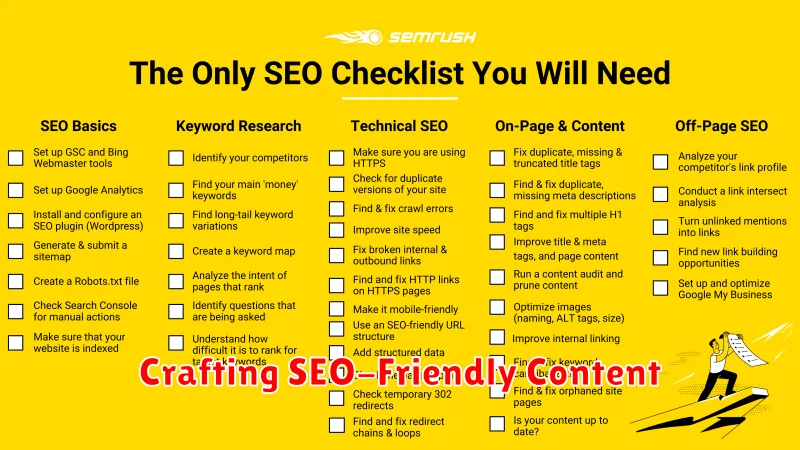
Creating content that ranks well in search engines involves understanding what your audience searches for and how search engines interpret that information. Keyword research is crucial. Identify relevant keywords and incorporate them naturally within your content. Avoid keyword stuffing, which can negatively impact your ranking.
Content structure plays a vital role. Use headings (H1-H6) to organize your content logically. This makes it easier for both search engines and readers to understand the hierarchy of information. Readability is also key. Write in clear, concise sentences and use formatting like bullet points and lists to break up large blocks of text.
Content quality matters. Aim to provide valuable, informative, and engaging content that answers the user’s search query effectively. Fresh, original content is preferred by search engines. Regularly updating your existing content can also improve its visibility.
Tracking Content Performance
Tracking your content’s performance is crucial for understanding what resonates with your audience and refining your SEO strategy. It helps you identify successful content, understand areas for improvement, and ultimately, drive more organic traffic to your website.
Key metrics to monitor include:
- Organic Traffic: The number of visitors coming from search engines. Track this through tools like Google Analytics.
- Keyword Rankings: Where your content ranks in search results for specific keywords. Tools like SEMrush or Ahrefs can help you monitor these.
- Click-Through Rate (CTR): The percentage of people who see your content in search results and click on it. A higher CTR indicates compelling titles and descriptions.
- Bounce Rate: The percentage of visitors who leave your page after viewing only one page. A high bounce rate might suggest issues with content quality, relevance, or user experience.
- Time on Page: How long users spend on your content. Longer time on page typically signifies engaging content.
By regularly analyzing these metrics, you can adapt your content strategy to create more of what works and less of what doesn’t. This iterative approach is essential for maximizing your SEO efforts.
Avoiding Common SEO Mistakes
Even with the best intentions, beginners often make common SEO errors that hinder their content’s visibility. Being aware of these pitfalls is the first step to avoiding them.
One frequent mistake is keyword stuffing. While keywords are crucial, overusing them feels unnatural and can be penalized by search engines. Focus on natural language and incorporate keywords strategically within your content.
Another common issue is neglecting on-page optimization. This includes elements like title tags, meta descriptions, and header tags (H1-H6). Ensure these accurately reflect your content and include relevant keywords.
Ignoring mobile optimization is also a significant error. With the majority of searches happening on mobile devices, your website must be responsive and provide a seamless user experience across all platforms. Test your site’s mobile-friendliness regularly.
