
Are you struggling to convert email subscribers into paying customers? Do you want to learn how to build a high-converting email marketing funnel that consistently generates leads and sales? In today’s digital landscape, a well-structured email marketing funnel is essential for any business seeking to maximize its return on investment (ROI). This article will provide a comprehensive guide on how to build a high-converting email marketing funnel that drives conversions and boosts your bottom line. Learn the key strategies and best practices to effectively nurture your leads and turn them into loyal customers using the power of email marketing.
From crafting compelling lead magnets and designing engaging welcome emails to segmenting your audience and automating your email sequences, we’ll cover every aspect of building a successful email marketing funnel. This guide will provide actionable steps to create a high-converting funnel, regardless of your industry or business size. Whether you’re just starting out with email marketing or looking to optimize your existing funnel, this article will equip you with the knowledge and tools you need to achieve significant results. Discover how to build an email marketing funnel that not only captures leads but also nurtures them through the sales process, ultimately leading to increased conversions and business growth.
Understanding the Customer Journey
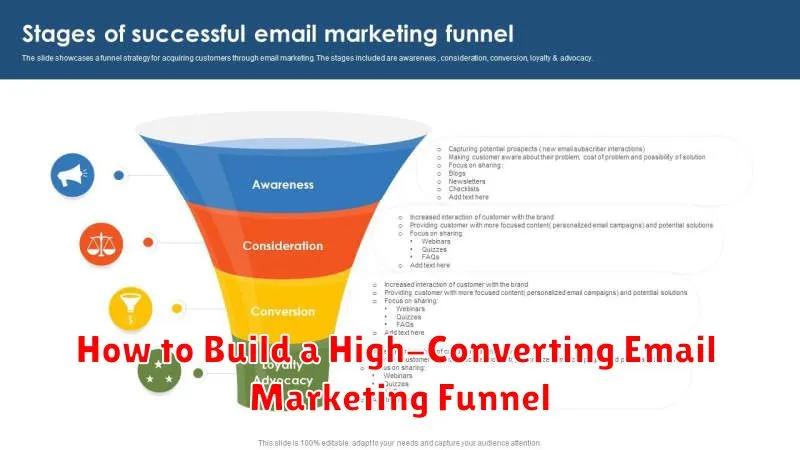
Before building an email marketing funnel, it’s crucial to understand the customer journey. This involves identifying the different stages a potential customer goes through, from initial awareness to becoming a loyal advocate.
Typically, the customer journey can be broken down into a few key phases:
- Awareness: The potential customer becomes aware of a problem or need.
- Consideration: The customer actively researches and evaluates solutions to their problem.
- Decision: The customer chooses a specific product or service to purchase.
- Action: The customer makes the purchase.
- Loyalty/Advocacy: The customer becomes a repeat buyer and potentially recommends the product/service to others.
By mapping out your customer journey, you can tailor your email messaging to address the specific needs and concerns of individuals at each stage. This targeted approach increases the effectiveness of your email funnel and drives higher conversions.
Creating an Irresistible Lead Magnet
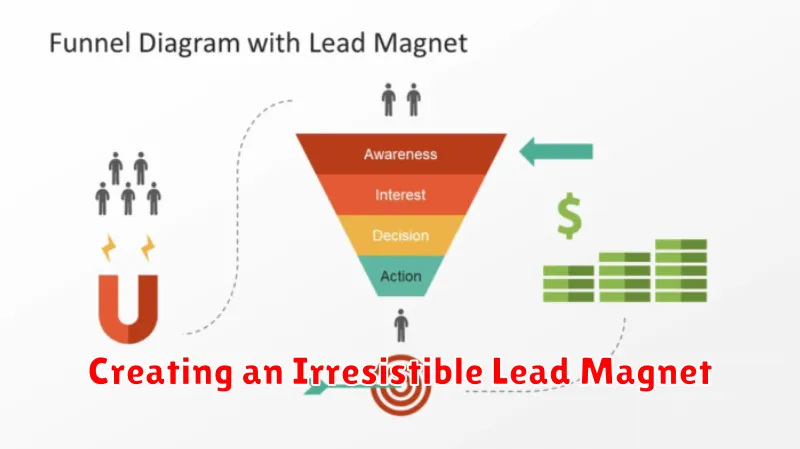
A lead magnet is the enticing offer you present to potential subscribers in exchange for their email address. It’s the cornerstone of your lead generation efforts, so it needs to be high-value and relevant to your target audience.
Consider what problem your ideal customer is facing and how you can solve it with a concise, actionable resource. Some popular lead magnet formats include:
- Checklists: Provide a step-by-step guide for completing a specific task.
- Ebooks: Offer in-depth knowledge on a particular topic.
- Templates: Give users a pre-designed framework they can easily customize.
- Webinars: Host a live online training session.
- Discount Codes: Offer an exclusive discount for new subscribers.
The key is to create a lead magnet that is easily consumable and provides immediate value. A compelling title and a brief description highlighting the benefits will further enhance its attractiveness.
Designing an Automated Email Sequence
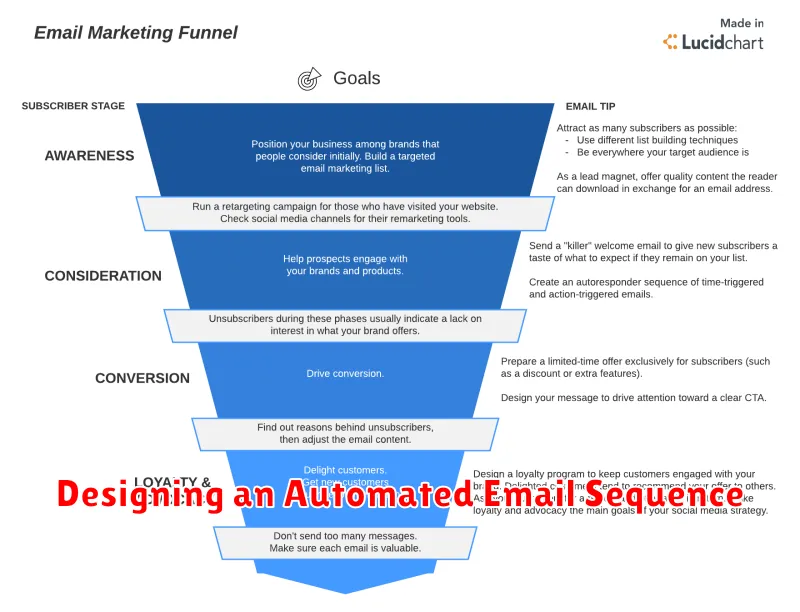
A well-designed automated email sequence is crucial for nurturing leads and guiding them through your marketing funnel. This involves strategically crafting a series of emails triggered by specific actions or time intervals.
Key considerations when designing your sequence include the target audience, their stage in the buyer’s journey, and the overall goal of the sequence. For example, a welcome sequence for new subscribers will differ significantly from a post-purchase follow-up sequence.
Each email in the sequence should have a clear purpose and call to action. Whether it’s downloading a resource, signing up for a webinar, or making a purchase, guide your subscribers towards the desired outcome.
Timing is essential. Delivering emails too frequently can overwhelm subscribers, while long delays can lead to disengagement. Test different sending frequencies to find the optimal balance.
Segmenting Your Email List
Segmenting your email list is crucial for improving your email marketing ROI. By dividing your subscribers into smaller, more targeted groups, you can send highly relevant content that resonates with each segment’s specific needs and interests. This leads to higher open rates, click-through rates, and ultimately, conversions.
Consider segmenting based on several factors, including demographics (age, location, gender), purchase history (past purchases, average order value), engagement (open rates, click-through rates), website behavior (pages visited, products viewed), and lead source (how they joined your list).
Effective segmentation allows you to tailor your messaging and offers. For example, a segment of customers who frequently purchase high-value items might receive exclusive offers for premium products, while a segment of new subscribers might receive a welcome series focused on brand introduction and popular items.
Using A/B Testing to Optimize Performance
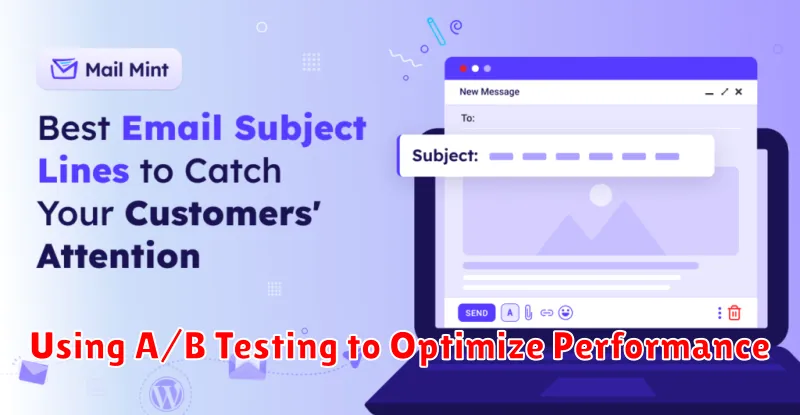
A/B testing is a critical component of optimizing your email marketing funnel. It involves comparing two versions of an email element (Version A and Version B) to determine which performs better based on a specific metric.
You can A/B test various elements within your emails, such as:
- Subject lines: Test different phrasing, lengths, and emojis to see what grabs attention.
- Email copy: Experiment with different tones, lengths, and calls to action.
- Send times: Determine the optimal time to send emails for maximum engagement.
- From names: See if a personalized sender name or company name performs better.
- Email design: Test different layouts, colors, and imagery.
By analyzing the results of your A/B tests, you can make data-driven decisions to improve your open rates, click-through rates, and ultimately, your conversion rates.
Tracking Open and Click-Through Rates
Tracking open and click-through rates is crucial for evaluating the effectiveness of your email marketing funnel. These metrics provide valuable insights into how your audience interacts with your emails and helps identify areas for improvement.
The open rate indicates the percentage of recipients who opened your email. A low open rate might suggest issues with your subject lines or sender information. Experiment with different subject line approaches like personalization or urgency to improve this metric.
The click-through rate (CTR) measures the percentage of recipients who clicked on a link within your email. A low CTR could indicate problems with your email content, call to action, or the relevance of your offer. Ensure your content is engaging and that your call to action is clear and compelling.
By consistently monitoring and analyzing these metrics, you can refine your email marketing strategy, improve engagement, and ultimately drive more conversions.
Nurturing Leads to Convert
Lead nurturing is the process of developing relationships with potential customers at every stage of the sales funnel. A well-structured nurturing strategy focuses on providing valuable information and building trust, ultimately increasing the likelihood of conversion.
Email marketing plays a crucial role in lead nurturing. Through targeted email sequences, you can deliver personalized content that addresses the specific needs and interests of each lead segment. This might include sharing educational resources, showcasing product features, offering exclusive discounts, or providing customer testimonials.
Effective lead nurturing requires careful segmentation. By dividing your leads into groups based on their behavior, demographics, or purchase history, you can tailor your messaging and offers to resonate with each segment’s unique characteristics. This targeted approach leads to higher engagement and conversion rates.
