

In today’s interconnected world, a robust social media presence is no longer optional but essential for businesses and individuals seeking to expand their reach and cultivate a thriving community. This comprehensive guide will equip you with the knowledge and tools necessary to build a social media strategy from scratch, regardless of your prior experience. From defining your target audience and selecting the right social media platforms to crafting compelling content and measuring your social media ROI, we will cover every crucial step in developing a winning strategy.
Whether you’re a small business owner, a budding entrepreneur, or an individual seeking to enhance your personal brand, mastering the art of social media marketing is paramount to success. This article will delve into the intricacies of social media strategy development, providing practical advice and actionable steps to help you create a highly effective and impactful social media presence. Learn how to leverage the power of social media to achieve your specific goals, whether it’s increasing brand awareness, driving website traffic, generating leads, or building a loyal following.
Defining Clear Objectives
Before diving into the specifics of your social media strategy, you must define clear and measurable objectives. What do you hope to achieve through your social media presence? Without well-defined goals, your efforts will lack direction and it will be difficult to measure success.
Your objectives should align with your overall business goals. Common social media objectives include:
- Increasing brand awareness: Expanding your reach and making more people aware of your brand.
- Driving website traffic: Leading users from your social media profiles to your website.
- Generating leads: Capturing contact information from potential customers.
- Boosting sales: Directly influencing purchasing decisions through social media platforms.
- Improving customer service: Using social media as a channel for customer support and interaction.
Ensure your objectives are SMART – Specific, Measurable, Achievable, Relevant, and Time-bound. For example, instead of aiming to “increase brand awareness,” a SMART objective would be “increase Instagram followers by 20% in the next quarter.”
Identifying Your Target Audience
Before diving into social media, understanding your target audience is crucial. This knowledge informs every aspect of your strategy, from the platforms you choose to the content you create.
Start by considering your existing customer base. Who are they? What are their demographics (age, location, gender, income, education)? What are their psychographics (interests, values, lifestyle)?
If you’re just starting out, research your competitors’ audiences. What platforms do they use? What type of content resonates with them? This can provide valuable insights.
Create buyer personas to represent your ideal customer. Give them names and backstories to make them feel real. This helps you visualize who you’re trying to reach.
Choosing the Right Platforms
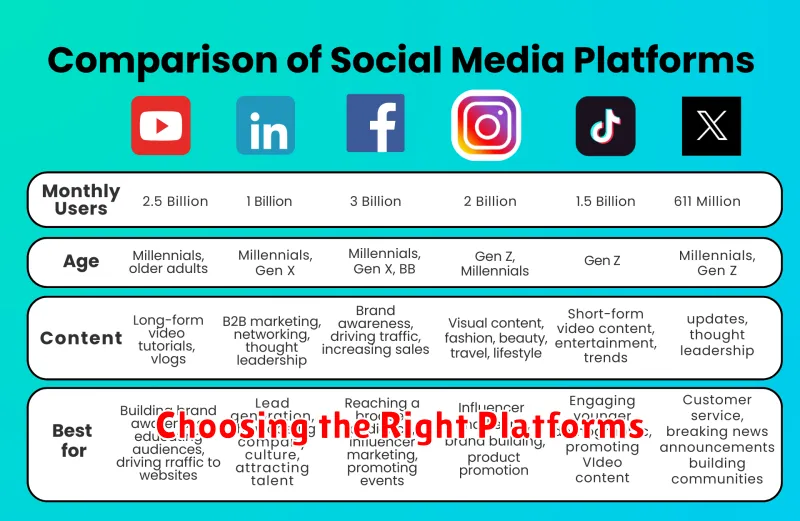
Selecting the right social media platforms is crucial for a successful strategy. Don’t feel pressured to be everywhere. Instead, focus on where your target audience spends their time. Conduct thorough research to understand your audience demographics and online behavior.
Consider the strengths of each platform. Instagram is visually driven, ideal for businesses with strong imagery. Twitter excels in real-time updates and conversations. LinkedIn is the platform for professional networking and B2B marketing. Facebook offers a broad reach and diverse advertising options.
Evaluate your resources. Managing multiple platforms effectively requires time and effort. Start with one or two platforms and gradually expand as your team and resources grow.
Creating a Content Plan

A well-defined content plan is crucial for a successful social media strategy. This plan acts as your roadmap, guiding your posting schedule and ensuring consistent messaging.
Start by understanding your target audience. What are their interests? What kind of content are they looking for on social media? This information will help you tailor your content to resonate with them effectively.
Next, establish your content pillars. These are the core themes or topics that your brand will focus on. For example, if you’re a fitness company, your pillars might include workout routines, healthy recipes, and motivational tips.
Develop a content calendar. This will outline what you’ll post, when you’ll post it, and on which platforms. Consistency is key, so aim for a regular posting schedule that you can maintain.
Consider the types of content you’ll share. This might include text posts, images, videos, or even live streams. Varying your content keeps your audience engaged and caters to different preferences.
Establishing a Brand Voice
Your brand voice is the personality and emotion infused into your communication. It’s how you present your brand to the world. A consistent brand voice builds recognition and fosters trust with your audience.
Consider these key elements when defining your brand voice:
- Tone: Is your brand playful, serious, formal, or informal?
- Language: What kind of vocabulary and sentence structure will you use?
- Purpose: What message do you want to convey to your audience?
Documenting your brand voice guidelines ensures consistency across all social media platforms. This includes details on language, tone, and even punctuation preferences.
Monitoring Engagement Metrics
Monitoring engagement metrics is crucial for understanding the effectiveness of your social media strategy. It helps identify what resonates with your audience and what needs adjustment.
Key metrics to track include:
- Reach: How many unique users saw your content.
- Impressions: The total number of times your content was displayed.
- Engagement Rate: Calculated as total engagement (likes, comments, shares) divided by reach or impressions.
- Likes/Reactions: Indicate positive sentiment towards your content.
- Comments: Reflect audience discussion and feedback.
- Shares: Demonstrate how often your content is amplified by your audience.
Regularly analyze these metrics to gauge the success of your strategy and inform future content creation.
Adapting Based on Performance
Analyzing performance is crucial for a successful social media strategy. Regularly review your key metrics. This includes metrics like reach, engagement (likes, comments, shares), and website traffic originating from social media.
Use these insights to understand what’s working and what’s not. High engagement on certain types of content suggests your audience resonates with that material. Low reach might indicate a need to refine your targeting or posting schedule.
Adapt your strategy based on this data. If video content performs well, consider increasing video production. If a particular posting time yields better results, adjust your schedule accordingly.
Don’t be afraid to experiment. Try different content formats, posting times, and targeting options. Continuously analyzing and adapting is key to optimizing your social media presence and achieving your goals.
