
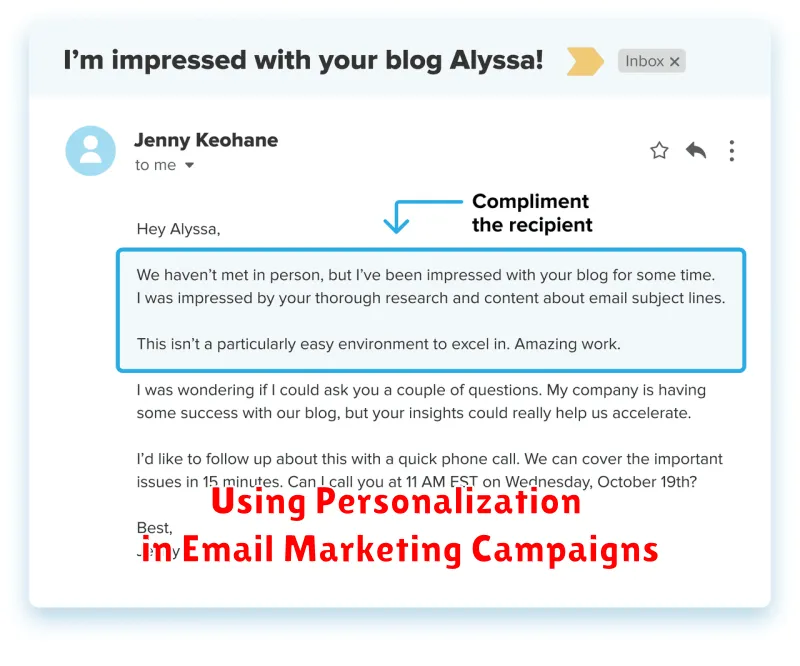
In today’s competitive digital landscape, email marketing remains a powerful tool for businesses to connect with their audience. However, generic email blasts often fall flat, failing to capture attention and drive conversions. Personalization is key to unlocking the true potential of your email marketing campaigns. By tailoring your messages to individual subscribers, you can significantly increase engagement, boost click-through rates, and ultimately, drive more sales.
This article explores the importance of personalization in email marketing and provides actionable strategies to implement it effectively. Discover how to leverage data, segmentation, and dynamic content to create personalized email experiences that resonate with your audience. We will delve into best practices for crafting subject lines, body copy, and calls-to-action that speak directly to the needs and interests of each recipient, maximizing the impact of your email marketing efforts.
Collecting Relevant Subscriber Data
Effective personalization hinges on gathering relevant subscriber data. This information fuels targeted campaigns that resonate with individual recipients. It’s crucial to collect this data ethically and transparently, respecting user privacy.
Start by collecting essential information during the signup process, such as name and email address. A double opt-in confirms genuine interest and helps maintain a clean email list. Beyond the basics, progressively collect more data through:
- Preference centers: Allow subscribers to manage their email communication preferences, including content topics and frequency.
- Surveys and polls: Gather specific insights into interests and needs, using concise and engaging questions.
- Website activity tracking: Monitor page visits, product views, and downloads to understand individual behavior and preferences. Ensure this data collection is compliant with privacy regulations.
Remember, data quality is as important as quantity. Strive for accurate, up-to-date information to maximize the effectiveness of your personalization efforts.
Segmenting Your Audience
Segmentation is crucial for effective personalized email marketing. It involves dividing your subscriber list into smaller groups based on shared characteristics. This allows you to tailor your messaging to resonate with each segment’s specific needs and interests, resulting in higher engagement and conversion rates.
Several factors can be used for segmentation. Demographics such as age, gender, and location are common starting points. Behavioral data like past purchases, website activity, and email engagement provides deeper insights. Psychographic segmentation considers values, interests, and lifestyle. Finally, engagement level separates active subscribers from less engaged ones, allowing you to tailor re-engagement campaigns.
By accurately segmenting your audience, you can move beyond generic blasts and deliver targeted content that truly speaks to individual subscribers. This leads to stronger customer relationships and improved campaign performance.
Crafting Personalized Subject Lines
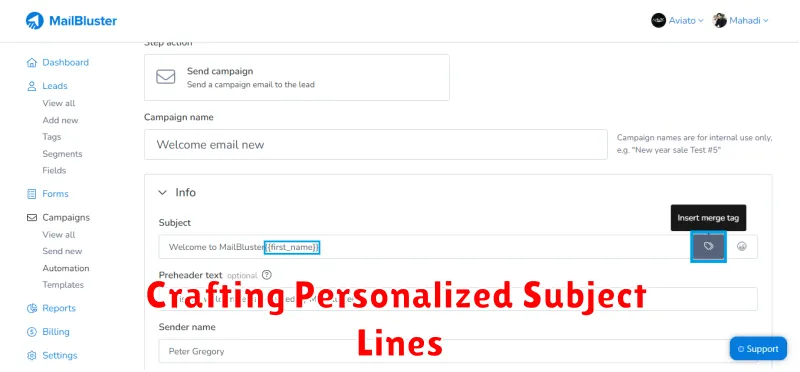
The subject line is the first, and often only, impression you make on a recipient. A personalized subject line significantly increases the likelihood of an email being opened. It grabs attention amidst the clutter of a typical inbox.
Effective personalization goes beyond simply inserting the recipient’s name. While using their name can be beneficial, consider incorporating other relevant data points. Think about their past purchases, browsing history, or location to tailor the subject line to their specific interests. For example, instead of a generic “New Arrivals,” a subject line like “New Hiking Gear You Might Like, [Recipient Name]” is more compelling for a customer who frequently browses hiking equipment.
Key considerations when crafting personalized subject lines include keeping them concise and intriguing, clearly conveying the email’s value proposition, and testing different variations to see what resonates best with your target audience. A/B testing different subject lines can provide valuable insights into what motivates your audience to engage.
Using Dynamic Content in Emails
Dynamic content takes email personalization a step further by allowing you to automatically change email content based on individual recipient data. This goes beyond simply inserting a name.
Imagine sending an email promoting various products. Instead of showcasing the same items to everyone, dynamic content lets you display products relevant to each recipient’s past browsing history or purchase behavior. This targeted approach significantly increases the chances of engagement and conversion.
Key benefits of using dynamic content include increased open rates, click-through rates, and conversions. It also leads to improved customer satisfaction and strengthens brand loyalty by delivering relevant and timely information.
Example Use Cases
- Showing different product categories based on past purchases.
- Displaying location-specific content, such as nearby store promotions.
- Tailoring the email language based on the recipient’s preferred language.
Sending Based on Behavior and Interests
Behavior-based email marketing leverages tracking user interactions to deliver highly personalized messages. This approach relies on analyzing data such as website browsing history, purchase activity, email engagement, and other relevant actions.
By understanding individual customer behavior, marketers can tailor their email campaigns to resonate with specific interests and needs. For example, if a user frequently browses a particular product category, they could receive emails showcasing new arrivals or special offers within that category.
Interest-based segmentation allows marketers to group subscribers based on their expressed preferences or observed behavior. This enables targeted messaging that is more relevant and less likely to be perceived as spam. Effective interest-based campaigns require careful data collection and analysis to accurately identify and segment audiences.
Combined, behavior and interest targeting offer a powerful way to enhance engagement and drive conversions. This data-driven approach empowers businesses to send the right message, to the right person, at the right time, maximizing the effectiveness of their email marketing efforts.
Measuring Personalization Impact
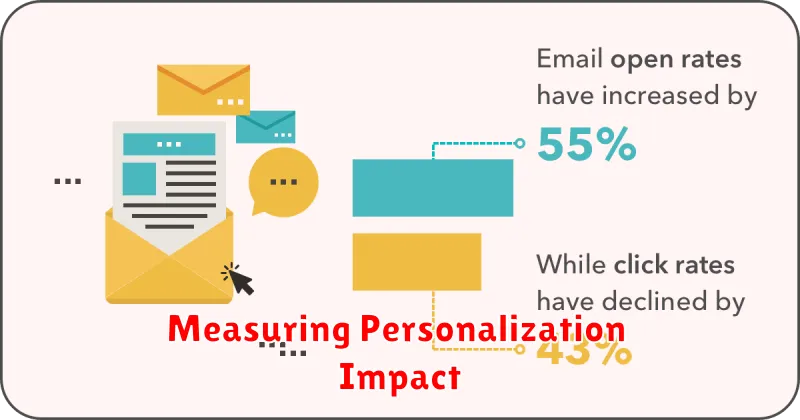
Measuring the effectiveness of your personalized email campaigns is crucial. Key Performance Indicators (KPIs) provide quantifiable metrics to demonstrate the impact of personalization on your marketing objectives.
Track metrics like open rates, which indicate how many recipients opened your email. A higher open rate suggests subject line personalization resonated with your audience. Click-through rates (CTR) measure how many recipients clicked on links within your email, reflecting engagement with personalized content. Conversion rates demonstrate how many recipients completed a desired action, such as making a purchase or signing up for a newsletter. Increased conversion rates are a strong indicator of effective personalization strategies.
Beyond these core metrics, consider measuring bounce rates to identify delivery issues and maintain a clean email list. Also, monitor unsubscribe rates to gauge audience satisfaction with your personalized content. High unsubscribe rates may indicate a need to refine your targeting or messaging.
By consistently monitoring these KPIs, you can assess the impact of personalization efforts and make data-driven adjustments to optimize future campaigns.
Avoiding Over-Personalization Mistakes
While personalization is crucial for effective email marketing, overdoing it can be detrimental. Over-personalization can make your emails seem creepy or invasive, leading to unsubscribes or spam reports. It’s essential to strike a balance between personalized content and respecting your audience’s privacy.
One common mistake is using too much personal information. Referencing highly specific details that a subscriber hasn’t explicitly shared can feel unsettling. Stick to information they’ve provided through forms or website interactions.
Another pitfall is assuming incorrect information. Double-check your data and segmentation to avoid addressing someone by the wrong name or referencing irrelevant purchase history. Inaccurate personalization can damage your credibility.
Finally, avoid over-segmenting your audience. While targeted segments are beneficial, creating hyper-specific segments can lead to logistical challenges and diluted messaging. Focus on broader segments based on shared interests and behaviors.
