
In today’s digital landscape, email marketing remains a cornerstone of successful marketing strategies. However, simply sending mass emails is no longer sufficient. To truly maximize the impact of your campaigns and foster meaningful connections with your audience, email segmentation is crucial. By dividing your subscriber list into specific groups based on shared characteristics, you can tailor your messaging to resonate with individual needs and preferences. This targeted approach yields significantly higher engagement rates, improved conversions, and a stronger return on investment. This article will explore powerful email segmentation techniques designed to boost engagement and elevate your email marketing performance.
Effective email segmentation empowers you to move beyond generic blasts and deliver personalized content that captures attention and drives action. From increasing open and click-through rates to minimizing unsubscribes and maximizing conversions, the benefits of email segmentation are undeniable. We will delve into various email segmentation techniques that leverage demographic, behavioral, and psychographic data to create highly targeted segments. Discover how to implement these strategies to cultivate stronger customer relationships and boost engagement across your email marketing campaigns, ultimately achieving greater success.
Segmenting by User Behavior
Segmenting your email list based on user behavior is a powerful way to deliver highly relevant content. This method focuses on how users interact with your emails and website, allowing you to tailor messages to their specific actions.
Key behavioral data points include email opens, clicks, website visits, purchases, and content downloads. By analyzing these actions, you can identify patterns and preferences.
For example, you can segment users who frequently open your emails but rarely click on links. This group might benefit from emails with clearer calls to action or different content formats. Similarly, you can target users who abandon their shopping carts with personalized reminders and incentives.
Effective behavioral segmentation can significantly improve key email metrics like open rates, click-through rates, and conversions. By sending the right message to the right person at the right time, you increase engagement and foster stronger customer relationships.
Using Demographics to Personalize Content
Demographic segmentation allows you to divide your email list based on shared characteristics such as age, gender, location, education, occupation, income, and family status. By understanding these attributes, you can tailor your content to resonate more deeply with specific groups.
For example, a clothing retailer might segment their audience by gender to promote relevant clothing lines. A financial services company could segment by age and income to offer appropriate investment opportunities. Using location data allows for targeting specific regions with localized promotions or content.
Key benefits of demographic segmentation include increased open and click-through rates, improved conversion rates, and stronger customer relationships due to more relevant messaging. It allows you to move past generic email blasts and create targeted campaigns that speak directly to the needs and interests of specific demographic groups.
Collecting demographic data can be achieved through signup forms, surveys, and website analytics. Remember to be transparent about data collection and usage, giving users control over their preferences.
Creating Interest-Based Tags
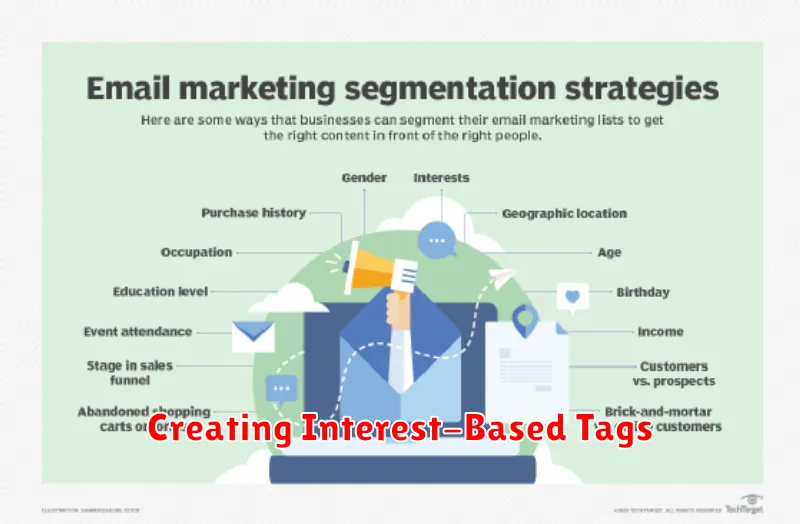
Interest-based tagging is a powerful segmentation technique that allows you to categorize subscribers based on their expressed or observed interests. This enables highly targeted email campaigns that resonate with individual preferences, leading to improved engagement.
Identifying Interests can be done through various methods. Explicit data collection involves directly asking subscribers about their interests via preference centers or signup forms. Implicit data is gathered by tracking website activity, purchase history, email engagement (opens and clicks), and other online behavior.
Tagging Strategies should be well-defined. Create specific and descriptive tags, avoiding overly broad categories. For instance, instead of “sports,” consider tags like “basketball,” “cycling,” or “tennis.” This granularity allows for more precise targeting.
Once tagged, subscribers can be segmented into distinct groups based on their respective interests, ensuring they receive relevant content that aligns with their preferences. This personalized approach fosters stronger connections and encourages higher engagement rates.
Timing Your Emails to Fit Time Zones
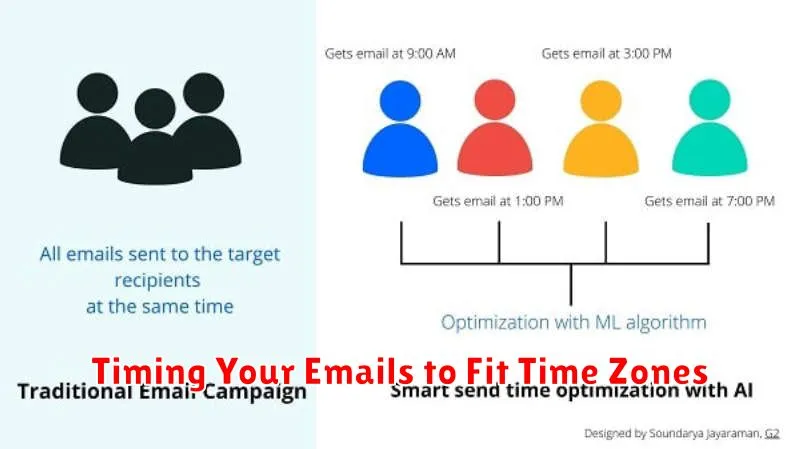
One crucial aspect of email segmentation is considering the recipient’s time zone. Sending an email at 2 AM in their local time is unlikely to yield positive results. Timing is everything when it comes to maximizing open and click-through rates.
Segmenting your audience by time zone allows you to send emails when they are most likely to be seen and acted upon. This involves strategic planning and potentially using email marketing software that allows for scheduled sending based on time zones.
Consider the typical workday in different regions. Aim to deliver your emails during business hours or when people are most active online within their respective time zones. This increases the likelihood of your message being read promptly.
Segmenting by Purchase History
Segmenting your email list based on past purchases is a powerful way to tailor messaging and offers. This allows you to send highly relevant content, increasing the likelihood of conversions.
Key segments to consider include:
- First-time buyers: Welcome them and offer incentives for a second purchase.
- Repeat customers: Reward their loyalty with exclusive discounts or early access to new products.
- High-value customers: Offer personalized recommendations and premium support.
- Customers who haven’t purchased recently: Re-engage them with targeted promotions or reminders about products they’ve viewed.
By understanding purchase frequency and average order value, you can further refine your segments and personalize your email marketing strategy. This data-driven approach helps boost engagement and cultivates stronger customer relationships.
Testing Different Approaches by Segment
Once you’ve segmented your audience, the next crucial step is to test different approaches tailored to each segment. This involves crafting unique email content, subject lines, and send times to optimize engagement for each specific group.
A/B testing is invaluable in this process. Try variations of your email elements. For example, test a concise subject line against a more descriptive one for your “new subscriber” segment. Simultaneously, experiment with different calls to action for your “loyal customer” group. Perhaps a discount code resonates more than a free shipping offer.
Track key metrics like open rates, click-through rates, and conversion rates for each test. This data-driven approach allows you to refine your strategy and ensure you’re sending the right message to the right people at the right time, ultimately maximizing your email marketing ROI.
Cleaning Your List Regularly
Maintaining a clean email list is crucial for maximizing engagement and deliverability. Regular cleaning involves removing inactive subscribers, bouncing email addresses, and spam traps.
Inactive subscribers are those who haven’t engaged with your emails for a specific period, such as six months or a year. Their lack of interaction negatively impacts your open and click-through rates, which can hurt your sender reputation.
Bounced emails are addresses that are no longer valid. Continuously sending to these addresses signals poor list hygiene to email service providers.
Spam traps are email addresses used to identify senders with questionable list-building practices. Hitting a spam trap can severely damage your sender reputation and even lead to blacklisting.
By regularly cleaning your list, you improve your email metrics, protect your sender reputation, and ensure your messages reach the right audience.
